
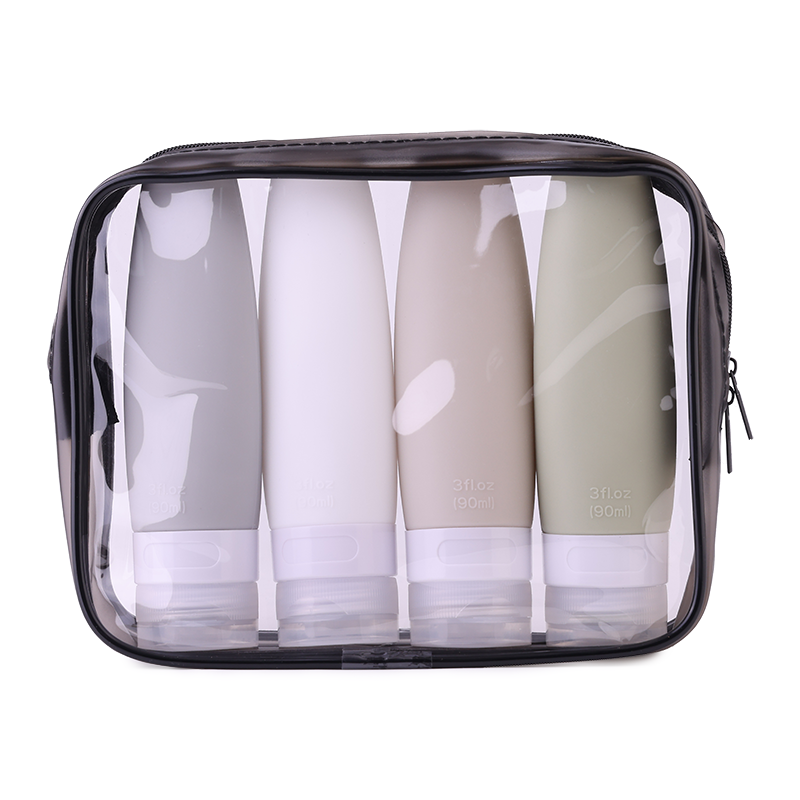
Why can a rinsed cap still feel sticky?
Examine the parts that the instructions allow you to remove. Residue may be distributed differently across the bottle wall, neck ledge, inside corners of the cap and dispensing passage. Water can readily reach an open cavity while leaving a pocket of lotion in a recessed area. Shaking increases contact but does not guarantee effective water exchange everywhere.
Locate the residue before changing the cleaning routine. A deposit in one corner suggests an access problem: can that area be opened, reached and flushed? A film across the whole wall calls for a cleaning method compatible with both the container and its contents. More rinsing will not necessarily compensate for inaccessible geometry.
Distinguish deposits from changes to the component itself. Persistent tackiness, swelling, cracks or distortion after cleaning are reasons to stop refilling and investigate the part and its compatibility with the liquid. Aggressive solvents or sharp tools used to scrape an outlet can create a sealing problem. Our guide to silicone and liquid compatibility explains that separate material-selection question.
Why is turning a bottle upside down not always enough?
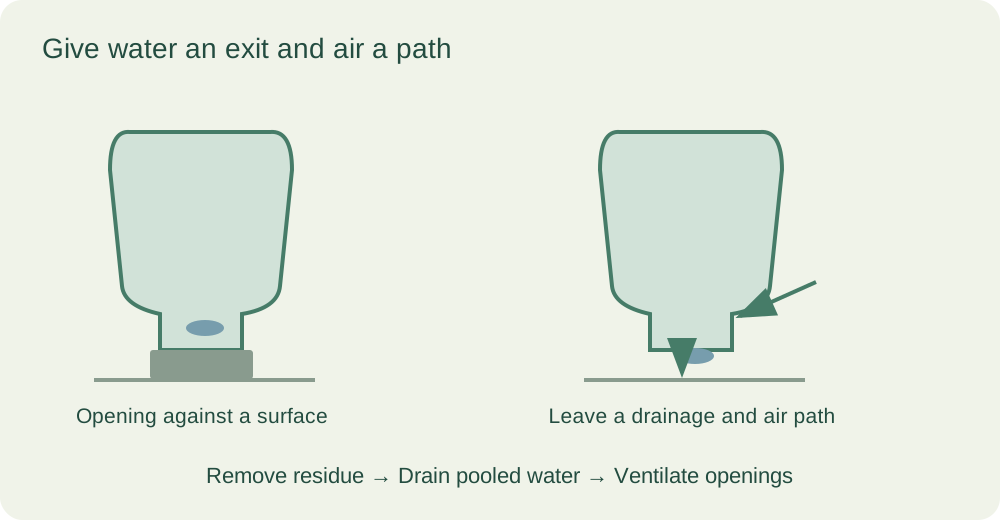
Drainage and drying do different jobs. Drainage removes pooled water; evaporation removes the remaining films and droplets. If an inverted opening sits flat against a worktop, some water may escape while air exchange remains restricted. Closing a cap also makes it harder for moisture inside to disperse.
When deciding how to dry silicone travel bottles, look for both a water exit and an air path. Separate removable parts as directed, let pooled water drain and keep openings ventilated. Do not push an unclean towel into the bottle. Do not assume that an oven, microwave or hot-air dryer is appropriate: the body, cap, decoration and connecting parts can have different care requirements.
A wide opening alone does not settle the issue. A shoulder recess or a cap cavity can retain water after the main chamber appears dry. Assess these local areas separately during development, rather than judging the assembly from a photograph of the bottle body.
Why does a little residual water matter?
The US Food and Drug Administration advises keeping cosmetic containers clean and warns that adding water can introduce microorganisms and dilute preservatives. That advice does not establish a contamination probability for a particular travel bottle. It does explain why leftover rinse water should be considered before refilling. FDA: Microbiological Safety and Cosmetics
A hypothetical mass calculation puts the proportion in perspective. If 1 gram of water remains and 20 grams of product are added, the resulting 21 grams contain approximately 4.8% added water. This is neither a measured residue level nor a safety limit. It illustrates why the same residual amount represents a larger proportion in a small refill. Its effect on stability or preservation depends on the actual formulation and assessment.
A practical sequence is to remove old contents as directed, clean, rinse thoroughly, drain and dry, inspect, and then refill. Avoid repeatedly topping up old product or returning decanted leftovers to the original package. The protection offered by the original packaging does not automatically transfer to another container.
How can buyers compare cleaning convenience?
Compare candidate bottles with the same contents, use period and cleaning conditions. Record the maintenance task rather than relying on a general “easy-clean” claim. The following is a development comparison, not a universal acceptance standard.
| Stage | What to record | What it can improve |
|---|---|---|
| Disassembly | Steps, tools and easily lost parts | Assembly simplicity and instructions |
| Cleaning | Residue locations and access for water or tools | Shoulder, cap and passage geometry |
| Drainage and drying | Water retained under a consistent storage position | Supports, openings and local recesses |
| Reassembly | Reversed, missing or incompletely seated parts | Location features and confirmation feedback |
Weighing can help compare drying progress. Establish a clean, dry reference mass, then track the assembly after washing and drainage under consistent conditions. This can identify a design that is still losing water. A stable reading, however, can be affected by balance resolution or remaining deposits and is not a microbiological test. Record the environment, orientation and observation times with the measurements.
Illustrative scenario: a travel set is easy to squeeze but difficult to refill
Consider a brand developing a travel-care set. Trial users like the squeeze feel, but notice lingering fragrance and moisture inside the cap before the next refill. This hypothetical scenario shows how to investigate the problem.
Replacing the whole silicone formulation first could consume a sampling round without addressing the residue location. Instead, examine the body and cap separately, photograph deposits before and after cleaning, and record the permitted disassembly steps. Compare the same contents in an alternative cap or shoulder design. Change one of those variables at a time so any improvement can be traced to its cause.
If deposits concentrate in a cap recess, first evaluate better access or fewer unnecessary cavities. If fragrance persists throughout both components, investigate liquid compatibility and the cleaning method. Acceptance should address the original task: have users follow the instructions through cleaning, drying, reassembly and refilling, then check the same residue locations and the reassembled seal. The aim is a maintenance routine users can repeat, rather than an attractive first unboxing alone.
Selecting a Zhongding bottle around the maintenance routine
Zhongding’s silicone travel bottle range includes tapered, flat, square and hanging-hole designs. Shape provides a starting point for selection; cleaning and drying depend on the actual opening, shoulder and cap of the chosen version. For travel sets, also consider whether users can finish drying before packing and whether the instruction card makes disassembly and refilling clear.
The Zhongding team has years of silicone product manufacturing experience. Bring the intended formula, use scenario and troublesome residue locations to a discussion of existing designs, samples and OEM/ODM customization. A worthwhile improvement may be one fewer inaccessible corner and one fewer opportunity to assemble the bottle incorrectly—making the next refill easier to complete.