
Zhongding's existing range includes cooking spoons with metal handles and silicone-covered heads, and peelers and pizza cutters with silicone handles. They show why products containing the same material can require very different design decisions.
Put silicone where it serves the task
Silicone occupies different positions in these examples: the spoon head, and the grips of the peeler and pizza cutter. A useful starting point is to divide a tool into its working end, its load-transmitting section and its grip. The working end contacts food or a container. The middle section carries bending and twisting loads. The grip helps the user control those loads.
| Existing Zhongding product | Visible material arrangement | Development question |
|---|---|---|
| Silicone-covered cooking spoon | Metal handle and silicone-covered head | How do support, edge conformity and joint loading work together? |
| Straight or Y-shaped peeler | Metal peeling structure and flexible grip | Does the grip help a wet hand maintain blade direction? |
| Silicone-handle pizza cutter | Cutting wheel, hand guard and silicone grip | Is downward force easy to control without unwanted rotation? |
These differences explain why softer is not automatically better. An unsupported soft grip can rotate noticeably under load. A bulky working end can lose its ability to follow a container edge. Stirring, lifting and cutting need different compromises.
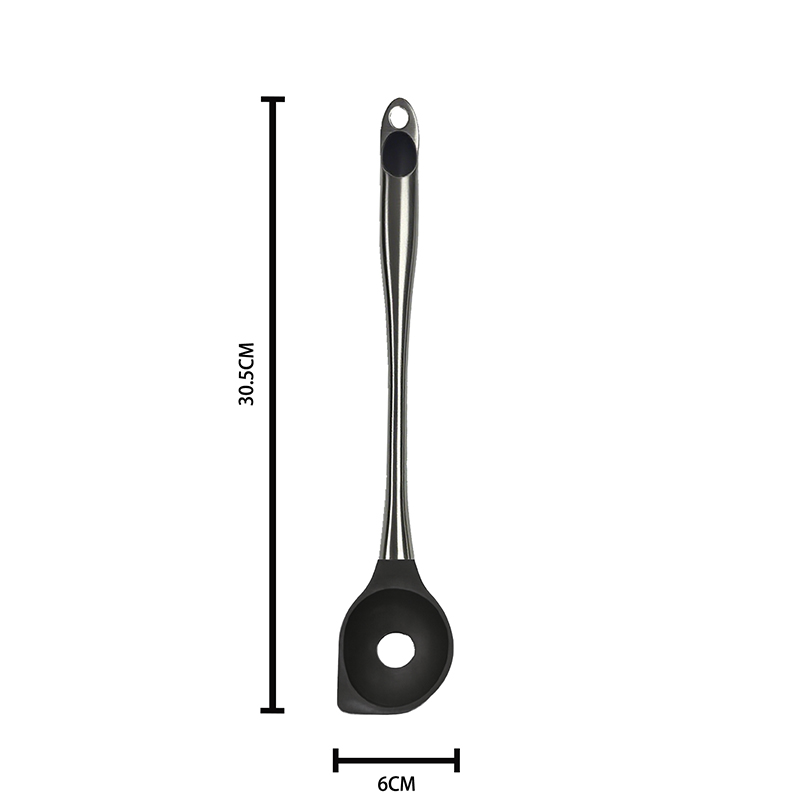
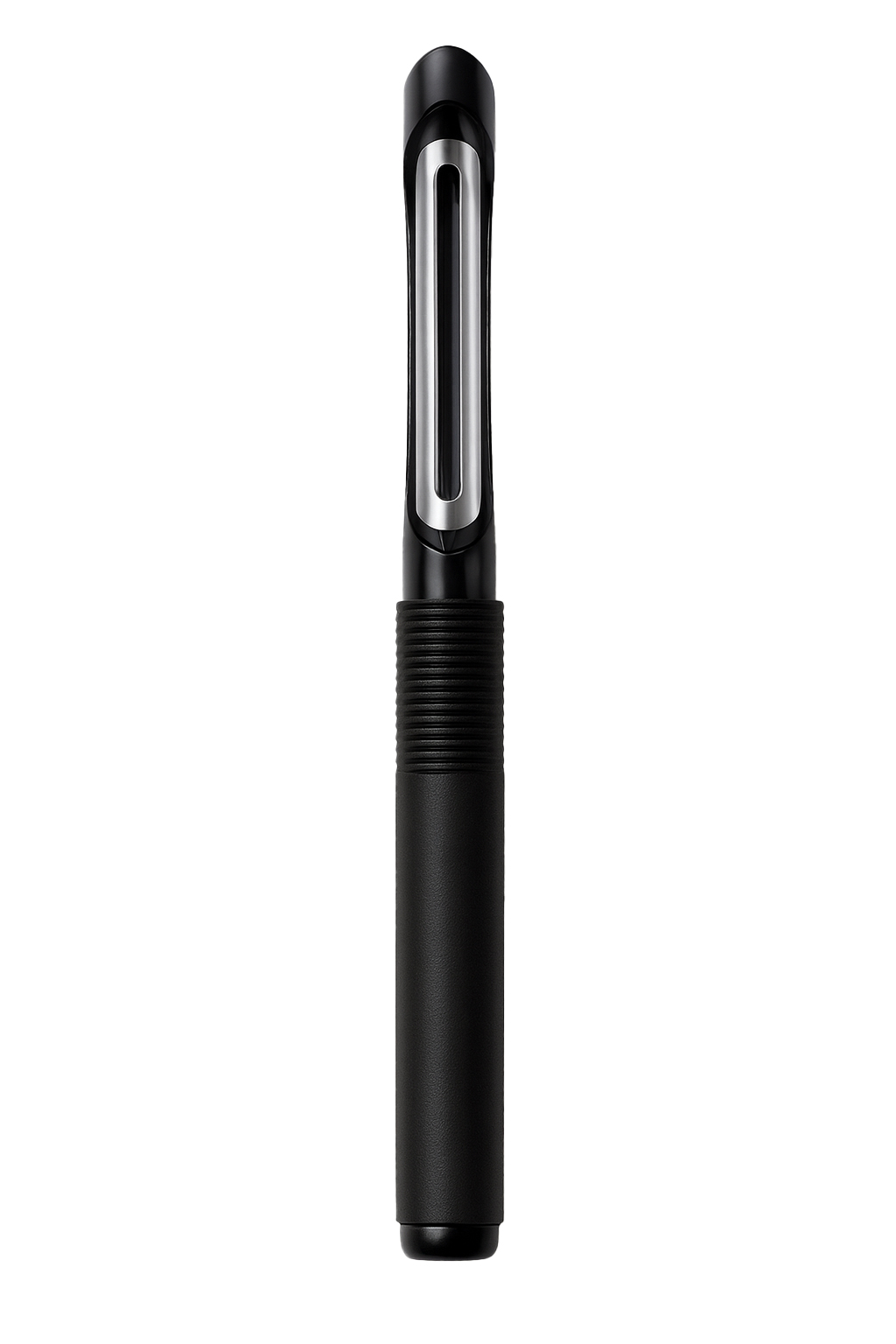
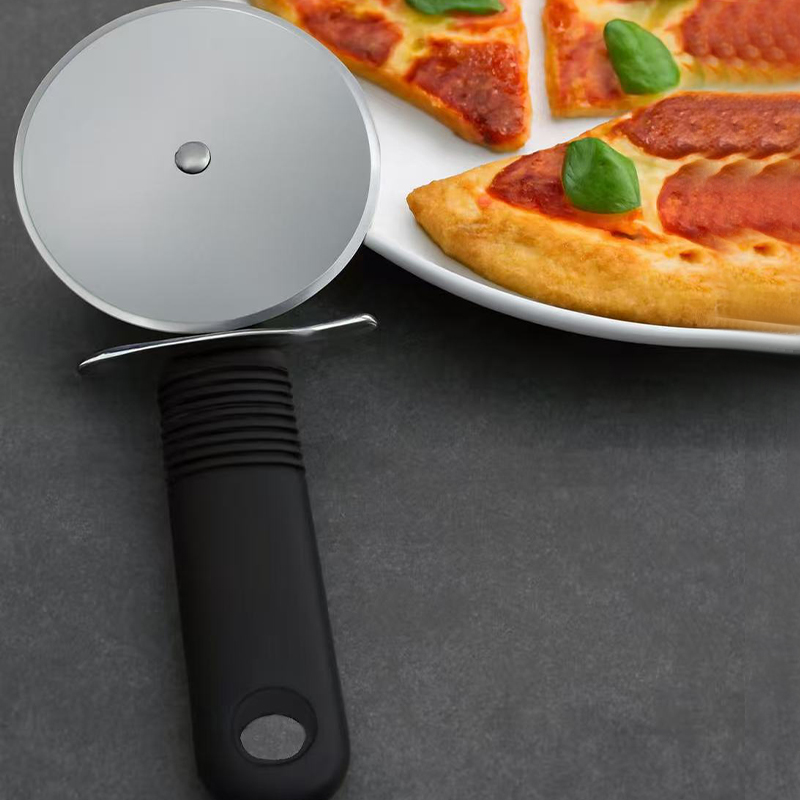
Existing product assets for structural comparison. Dimensions printed on the spoon image apply to the shown item, not the entire range.
Examine the interface, not just the finished appearance
An intact exterior does not establish a reliable connection. General design options include overmolding, mechanical retention, assembly and validated interfacial bonding. The actual method for a particular product must come from its engineering records, rather than a photograph.
Connections experience more than straight pulling. Lifting food creates a bending moment, while peeling introduces twisting. A single axial pull may not reveal movement that occurs during normal use.
Describe the observed problem precisely. Is an edge lifting, an entire sleeve rotating, a component sliding along a shaft, or a gap appearing after washing? Local edge lifting calls for examination of the transition and peeling behavior. Rotation calls for examination of anti-rotation features and fit. Identifying the movement makes material, structural and process decisions more productive than simply asking for a stronger bond.
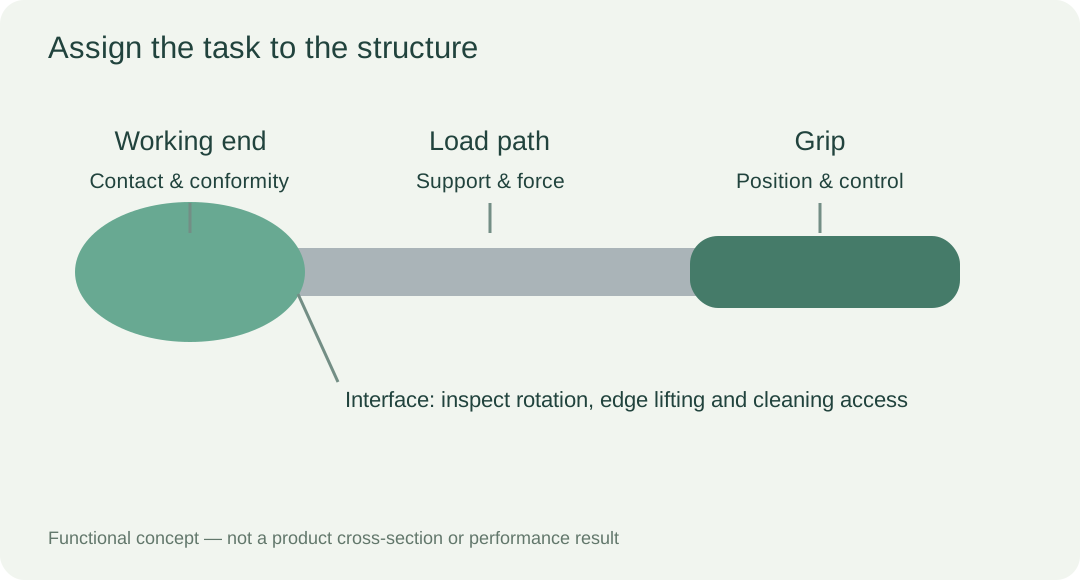
Conceptual functional diagram, not a cross-section of a particular product.
A silicone grip still needs a temperature assessment
Material heat resistance and a comfortable touch temperature are different properties. Heat can travel along connected components. The grip's covering thickness, position relative to the heat source and exposure time all affect the result.
The U.S. Department of Energy's 1992 fundamentals handbook gives the steady-state plane-wall relationship, written in SI units as Q̇ = kAΔT/L. Here Q̇ is heat-transfer rate in W, k is conductivity in W/m·K, A is area in m² and L is thickness in m. Doubling thickness halves the rate in that ideal model with other conditions unchanged. It does not halve a utensil's surface temperature or predict a Zhongding product's performance. DOE-HDBK-1012/2-92, Volume 2, HT-02 page 6
In an actual utensil, connected metal can provide another heat path, while the grip exchanges heat with air and the user's hand. A useful assessment records where the tool contacts the heat source, exposure duration and temperature over time at intended grip locations. A silicone trivet likewise needs assessment of thickness, loaded deformation and the supported surface; a material rating alone does not establish insulation performance.
Follow the cleaning path into the joint
Spoon-head junctions, sleeve ends and decorative grooves deserve attention. A visibly clean outer surface can coexist with trapped water or food at an interface. Specify whether a part is designed to be removed: removable parts need understandable reassembly, while permanent joints need examination for gaps after use and washing.
Compare samples using the same food residue and washing method, recording interfaces before cleaning, after cleaning and after drying. A dishwasher claim requires assessment of the complete assembly under the intended program, including metal, silicone, joints and other components. A silicone raw-material statement is not sufficient.
For EU food-contact applications, Article 3 of Regulation (EC) No 1935/2004 addresses transfer of constituents under normal or foreseeable use and resulting health, composition and sensory effects. Material names therefore cannot replace finished-product suitability documentation. EUR-Lex consolidated text dated 27 March 2021
Turn a product idea into a meaningful sample discussion
Start with the task and contact conditions before selecting the appearance. For a spoon, identify the food, container and lifting action. For a peeler or pizza cutter, define the grip, intended user and packaging needs. A generic kitchen-tool brief misses these differences.
Zhongding's team has years of silicone product manufacturing experience. Using our existing silicone kitchen products and metal-and-silicone formats as starting points, we can discuss structure, silicone components, colors, branding and packaging, and coordinate sample confirmation and production evaluation. Metal grades, joining methods, temperature conditions and supporting documents are reviewed for the specific project.
If a sample has a rotating grip, a difficult-to-clean interface or inconsistent handling, share the action that triggers the problem, photographs and washing conditions. That gives the project a concrete starting point for design and validation instead of merely another color or softer material.