
Material roles in an existing three-nipple design
Zhongding’s archived multi-pet water and nursing feeder is listed at 450 mL, with silicone nipples and an ABS body. The nipples are removable. That 450 mL describes storage capacity, not a feeding dose; dividing it into three equal portions would not establish an appropriate amount for each animal.
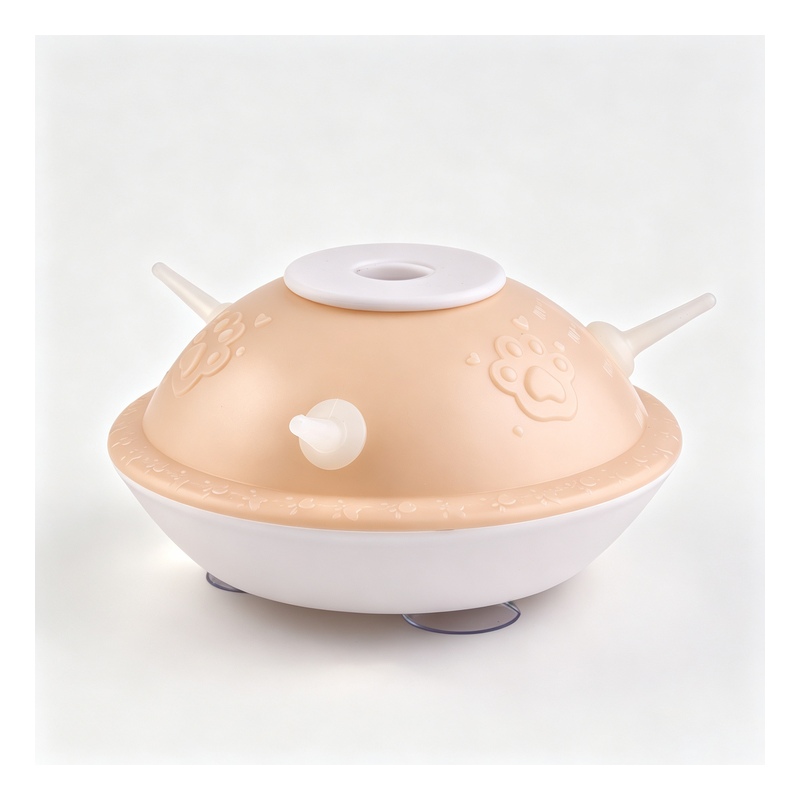
Existing product image showing nipple and body layout; it is not evidence of flow performance or feeding outcomes.
The silicone parts provide mouth contact and deformation, while the body provides storage and support. Assessing them together helps explain why a nipple can feel soft by itself but be difficult to use when assembled. The outlet, air entry, internal liquid route, assembly and operating state may all be relevant.
Flow describes the system, not only a hole
Flow is the amount of liquid passing in a given time, often expressed in millilitres per minute. A meaningful value needs a defined liquid, temperature, fill level, orientation and driving condition. A water measurement should not automatically stand for milk replacer under different operating conditions.
A silicone nipple deforms under load. A slit outlet, if present, can change its opening state. Where air enters through a defined route, obstruction can affect continued delivery. Investigate the actual geometry instead of attributing every failure to flow to a small hole, or every leak to excessive softness.
Maddie’s Fund’s orphaned-kitten teaching transcript advises dripping rather than streaming milk and avoiding squeezing a bottle to force feeding. Those instructions concern its bottle-feeding scenario, not a universal flow limit for multi-nipple devices, but they show why delivery behaviour matters. Maddie’s Fund: orphaned-kitten teaching transcript
Multiple positions require more than a total-volume reading
A falling reservoir level indicates liquid has left the container. It cannot show that each animal received an appropriate amount. Sucking ability, position and contact differ. Each animal still needs observation, with feeding quantities, frequency and weight monitoring established by a veterinarian or qualified rescue-care professional.
Development can start with bench comparisons that involve no animals. Test nipples from the same batch separately; compare one outlet operating with several operating; record high and low fill levels. Keep conditions consistent and observe onset, continuity, static dripping and what happens after the driving action stops. This seeks structural differences without inventing a universal millilitres-per-minute requirement.
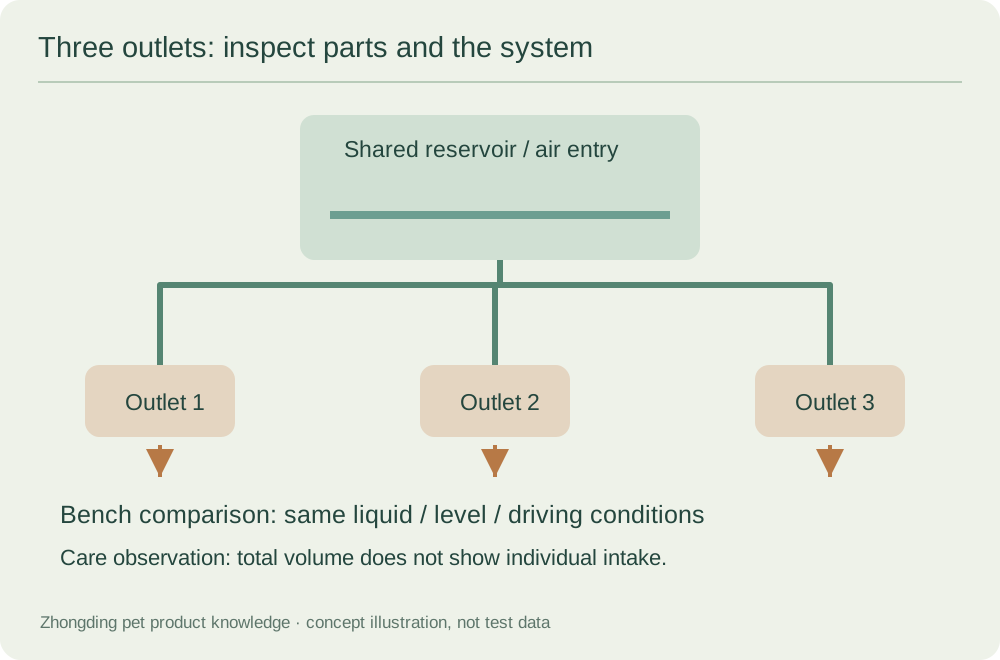
Development concept: compare liquid paths and outlets before professionally guided feeding use.
If only one position behaves differently, inspect that nipple and connection first. If all positions change as the reservoir empties, examine shared liquid and air-entry conditions. This sequence is more informative than repeatedly changing hardness or enlarging outlets.
Removable parts need reliable attachment
Removable nipples support cleaning and replacement, but easy disassembly and secure retention during use are different requirements. Consider initial assembly, reassembly after washing and expected pulling during use. A single check on a new, dry part does not cover wet conditions or repeated assembly.
Sample review can ask whether the part seats clearly, whether a misaligned part can appear correctly fitted, and whether the caregiver can recognize correct engagement. Inspect removed parts for cracks, edge damage and residue. Replacement compatibility must be defined; being able to push a part into an opening does not establish interchangeability.
Users should follow the product’s fitting and inspection instructions rather than cutting a nipple opening larger. Stop and investigate cracks, looseness, deformation or abnormal dripping. Coughing, abnormal breathing or suspected milk aspiration requires prompt veterinary help, not simply a softer nipple. Maddie’s Fund’s kitten-and-puppy troubleshooting chart likewise connects coughing and breathing difficulties with possible milk aspiration and directs caregivers towards veterinary assistance. Maddie’s Fund: feeding problems and solutions
Cleaning must cover the assembly
Silicone nipples, an ABS body and other components do not share identical material properties. One part’s permitted cleaning conditions cannot automatically be applied to the whole product. Identify removable parts, locations needing separate brushing and allowed methods. Check that interfaces and liquid paths operate normally after cleaning.
Pay particular attention to the outlet interior, connection region and reservoir base. If a caregiver cannot see or reach them, discuss access and disassembly during design. An easy-clean label cannot solve an inaccessible passage.
What Zhongding can help customize
The Zhongding team has years of silicone product manufacturing experience. Its existing pet nursing feeder can start discussions about nipple geometry, attachment, body fit, colours and packaging. “Flow is inconsistent” provides a clearer problem than simply requesting a softer material.
Provide the intended animals and care setting, liquid information, placement, single- or multiple-position use and washing routine. Then agree on sample comparisons. Zhongding can translate material and geometry requirements into manufacturable, inspectable products while appropriate professionals guide feeding. Discussing the customization brief connects product development with the actual care task.