
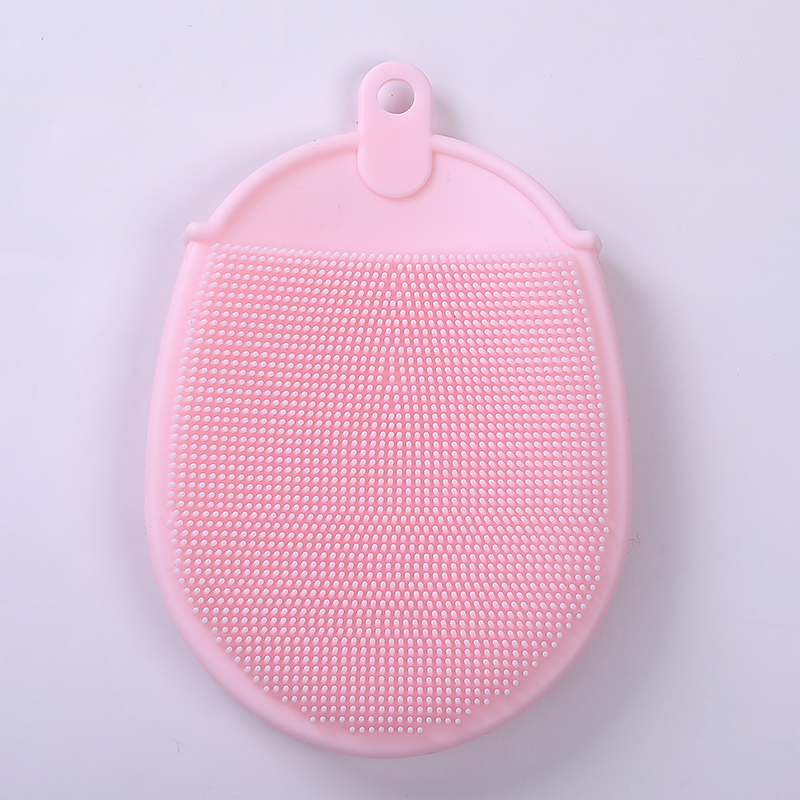
Is the goal cleaning—or stronger friction?
People comparing a silicone face scrubber vs hands generally want to know whether an additional tool is useful for them. Some want easier handling with wet hands; others enjoy a particular texture. Expectations about acne, blackheads or changes in skin quality go beyond what the words “soft silicone” can establish.
The American Academy of Dermatology’s basic face-washing advice centers on fingertips and a gentle cleanser, and cautions that scrubbing can irritate skin. A brush should therefore not be presented as an upgrade everyone needs, or as dermatologist-recommended solely because of its material. AAD: Face washing 101
For product development, this points to a useful objective: help users control a manual accessory without encouraging stronger stimulation as a sign of cleanliness. People with discomfort, damaged skin or an ongoing skin treatment should follow appropriate professional advice about cleansing. The tool is not a treatment.
Why does a soft feel not settle the question?
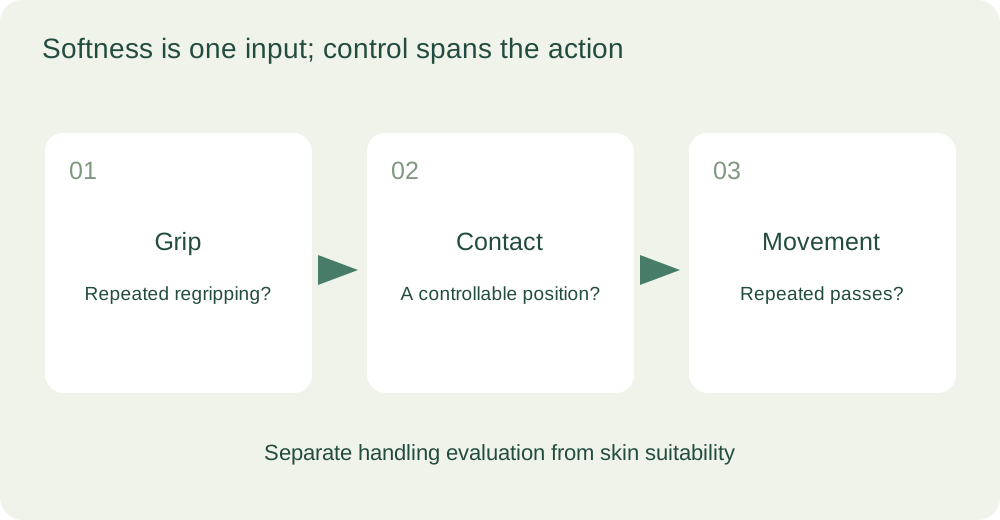
Squeezing a brush in your hand mainly reveals its overall deformation. During use, skin contacts the bristle ends and experiences local forces during movement. A flexible body, flexible bristles and an easy grip are related but distinct properties. Our silicone brush bristle design guide discusses geometry; here, the focus is how a person controls the tool.
A brush that is easy to hold dry may slip when coated with cleanser. To prevent a drop, the user may grip harder, change hand posture and unintentionally press harder against the skin. Softer material is not necessarily the first solution. The grip area, strap clearance or point at which force enters the body may deserve attention first.
Also watch the range of movement. An oversized head can make it difficult to see and position a small contact area. A grip located far from that area may make movement harder to control. A useful sample review explains why a person applies extra force rather than relying only on a hardness number.
Can I use a silicone face scrubber every day?
That question concerns tool use, which is different from the frequency of ordinary face washing. Fingertip contact, manual brushing and powered vibration involve different actions. Calling each action “one use” does not make the contact conditions equivalent.
Watch for discomfort after introducing a tool and for a tendency to revisit the same area repeatedly in pursuit of a cleaner feeling. Stinging, persistent redness or discomfort should not be interpreted as evidence that the product is working. Stop using a tool that causes discomfort and seek dermatological advice if symptoms persist. Instructions should not promise one daily frequency or brushing duration suitable for everyone.
Foam is also an unreliable substitute for performance. Its appearance depends on the cleanser, water and agitation. Developers can compare how conveniently a design produces lather, but a photograph of foam does not establish cleansing efficiency or skin benefit.
Illustrative scenario: the user keeps pressing harder to hold the brush
Consider a personal-care brand developing a manual brush for a cleansing kit. Early handling feedback says, “I cannot hold it securely, so I keep pressing it down.” This hypothetical development scenario shows how to translate an ambiguous comment into an actionable question.
Keep the contact surface and material option unchanged while comparing two grips: an edge held between the fingers and a supporting hand strap. Begin on a model surface, observing handling with dry hands, wet hands and the intended cleanser. Record slipping, repeated regripping and awkward finger posture. There is no need to use someone’s face as the first test surface for a basic grip problem.
If the alternative grip reduces regripping, next investigate control across different hand sizes. If it does not, examine overall size and weight distribution. A later real-use evaluation still needs an appropriate, defined plan: improved handling on a model is not evidence of greater skin safety.
The proposed solution addresses control. It turns an imprecise request for gentleness into observable movements and design choices while keeping skin suitability as a separate evaluation.
What should a brand include in its brief?
| Problem to solve | What to compare in samples | What the observation does not establish |
|---|---|---|
| Slipping with wet hands | Grip, hand changes and drops with the intended cleanser | Dry handling alone does not prove slip resistance |
| Excessive pressure | Grip position, orientation and controllability | Low hardness does not establish suitability for every sensitive skin type |
| Difficult rinsing | Bristle roots, strap areas and drainage | Silicone alone does not establish antibacterial performance |
| Unclear use | Instructions for location, movement, care and stopping use | One fixed duration does not replace suitability evaluation |
Zhongding’s existing palm cleansing brushes and personal-care brush structures provide starting points for discussions about grip, dimensions, contact surfaces and maintenance. Facial use must be confirmed for the specific project; not every cleaning brush is automatically a facial product.
The Zhongding team has years of silicone product manufacturing experience. Bring the intended users, cleanser, grip concept and handling problem to a custom silicone product discussion. Defining the action a product should help people perform creates a more credible product than attaching a long list of unverified benefits to its material.