
An unchanged appearance does not mean no migration
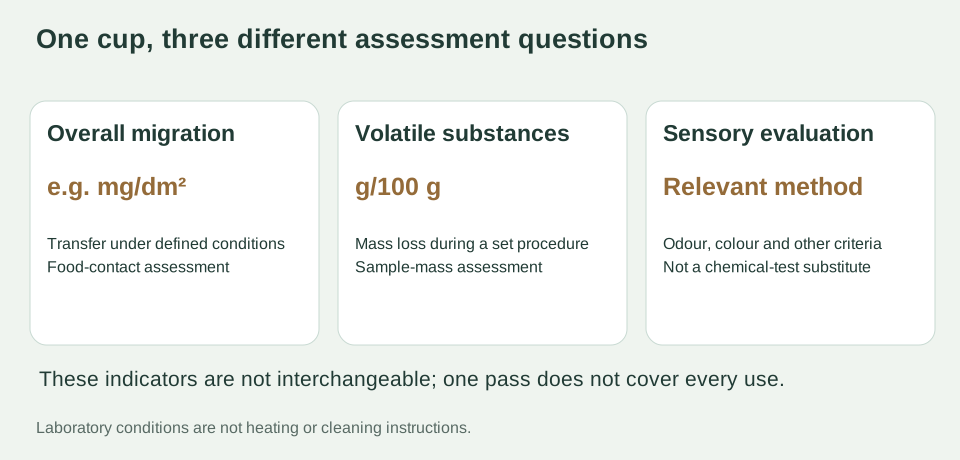
Migration is the transfer of constituents from a material into food or a food simulant. It does not necessarily cause visible damage. An intact cup with normal colour provides a useful observation, but cannot replace testing under appropriate conditions.
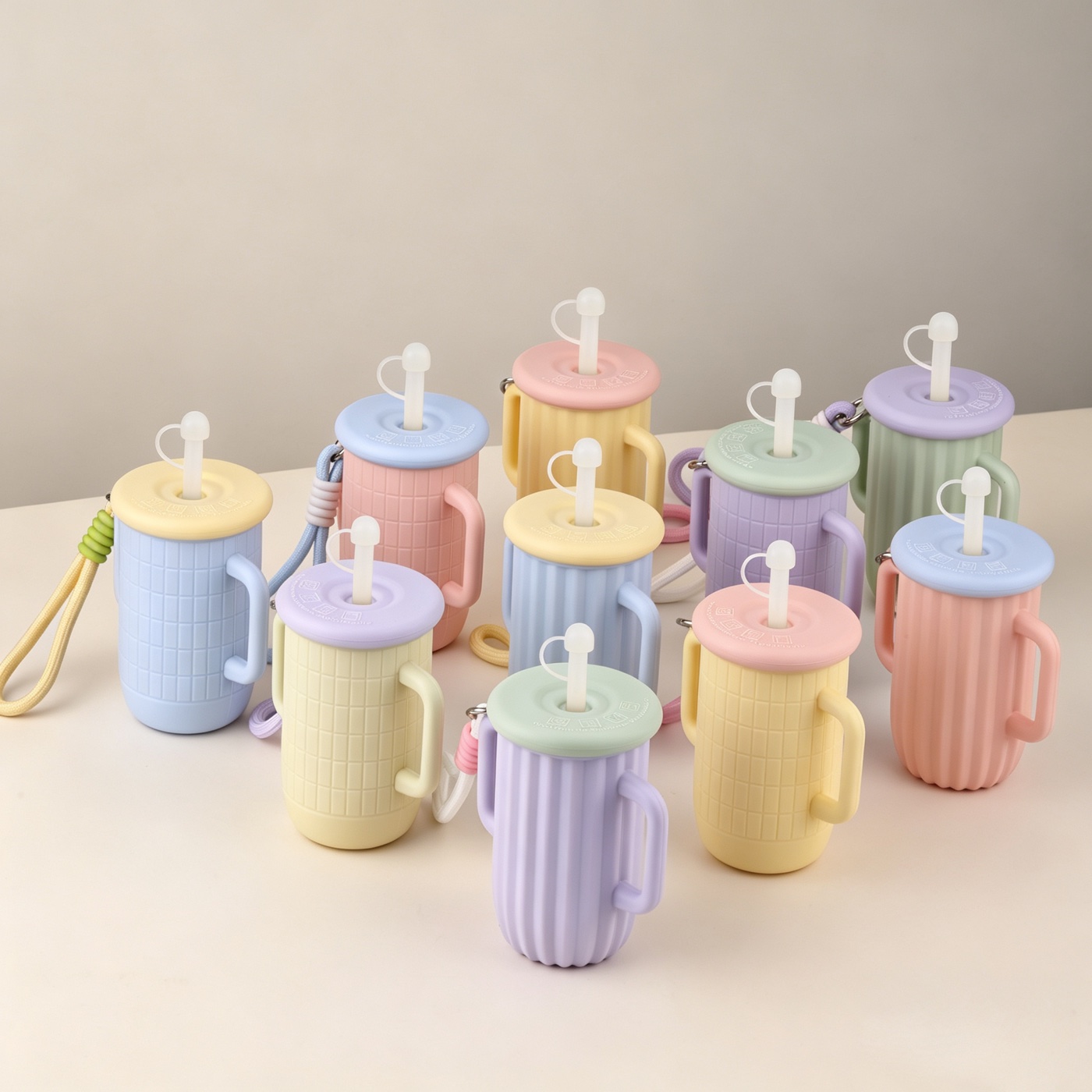
For a cup with a lid and straw, the contact route extends beyond the base. The inner wall, relevant lid surfaces and straw must be assessed according to their actual materials and uses. A single or double handle does not change the underlying principle: the assessment should correspond to the product that will actually be delivered.
China’s current GB 4806.16—2025 includes requirements for raw materials and additives, sensory characteristics, general physicochemical parameters and other applicable restrictions. The following figures come from its Table 2. They are requirements, not test results for Zhongding products.
| Parameter | Limit and stated conditions | What to keep in mind |
|---|---|---|
| Overall migration | Generally ≤10 mg/dm²; select conditions under applicable provisions | Infant/young-child-specific articles require conversion using actual area-to-volume conditions, with a limit of ≤60 mg/kg |
| Potassium permanganate consumption | ≤10 mg/kg; water, 60°C for 2 hours | Not a combined measure of every substance’s toxicity |
| Heavy metals, expressed as Pb | ≤1 mg/kg; 4% acetic acid by volume, 60°C for 2 hours | Not a statement that every individual metal meets that value |
| Volatile substances | ≤0.5 g/100 g; determined under Annex B | Not the concentration migrating into a beverage |
Base substances and additives may also carry specific migration limits, total specific migration limits or maximum residual-content requirements. Copying four numbers into a brochure is not a complete compliance assessment. GB 4806.16—2025, Section 4, Table 2 and Annex B
Why 0.5% volatile substances is not 0.5% migration
The volatile-substances procedure in GB 4806.16—2025 determines sample mass loss after a specified sequence of preparation, drying, cooling and weighing. During the determination stage, sample pieces are heated at 200±3°C for 240±5 minutes, then cooled and weighed as specified. This is a laboratory procedure, not an instruction to put a drinking cup in an oven.
The denominator in g/100 g is sample mass. The denominator in mg/dm² is contact area. For mg/kg, the relevant parameter defines the basis. These are different quantities: changing the printed unit does not turn a mass-loss result into a measurement of substances in a drink.
CFSA’s official explanation states that the new volatile-substances parameter addresses substances including cyclic siloxane oligomers. It adds an assessment dimension; it does not remove the need for the other applicable checks. Official explanation of GB 4806.16—2025
Germany also assesses volatile compounds, but matching figures are not enough
BfR’s method Determination of Volatile Compounds in Silicone Consumer Products, version 02 dated September 2023, also refers to 0.5% by weight and describes gravimetric determination after water-removal conditioning at 100°C followed by heating at 200°C for four hours. It is a primary technical source for understanding this aspect of German silicone assessment. BfR original method, September 2023
Similar-looking figures do not make a Chinese report automatically equivalent to all German-market requirements. The applicable documents, sample preparation, result expression and other necessary parameters must be compared. BfR technical recommendations and legal duties under LFGB must also remain distinct; a method name is not government approval of a particular cup.
Odour is a signal, not a complete diagnosis
An abnormal odour deserves investigation of the material, processing, packaging, cleaning and use history. However, the absence of a noticeable smell does not establish that every parameter passes. Human smell is not a method for measuring the concentration of a particular substance, and invisible migration does not disappear because there is no detectable odour.
Similarly, whitening during squeezing can be influenced by formulation, strain, surface characteristics and colour. It is not a universal home test for food-contact compliance or curing chemistry. More reliable purchasing information includes the identified model, intended use, material description and evidence that corresponds to them.
Colour and processing belong in the assessment
The consumer receives a coloured, formed and processed cup, not merely an unprocessed base material. When colour, printing or another treatment changes, the coverage of existing documentation needs review. An unchanged cup outline does not prove that every other change is irrelevant.
Zhongding’s ribbed and column-textured double-handle silicone cups provide options for discussing colour and component combinations. Documentation review should follow the configuration ultimately selected. Raw-material statements and finished-sample identification both have value, and together help explain what is being supplied.
Zhongding’s team has years of silicone product manufacturing experience. Starting from existing cup styles, we can discuss drink type, use conditions, components and required documentation, then develop the appropriate sample-review and manufacturing brief. Trust grows when each conclusion can be connected to an identifiable product and set of conditions, rather than to a collection of certification abbreviations.