
For dispensing containers, cleaning accessories and ordinary seals, the practical question is whether both the material and the complete product continue meeting requirements after exposure to the intended liquid.
Why are “oil” and “cleaner” insufficient test descriptions?
Oil is a broad category, and liquid compositions vary. Products called cleaners may contain different solvents, surfactants and fragrances and may be used at different concentrations. Replacing the actual formula with a category name can extend a test result beyond its scope.
Shin-Etsu's silicone rubber handbook describes solvent effects including swelling, softening and changes in strength, depending on the medium. Its conditions and data help explain differences; they are not a promise of liquid resistance for every Zhongding product. Source: Shin-Etsu silicone rubber properties handbook, pages 6–7
Provide the liquid's specific identity, available composition information, actual use concentration and contact mode. Where a formula is confidential, share the necessary information through controlled channels with relevant material or testing personnel. It need not be disclosed in a public article or public inquiry.
What does silicone swelling mean?
Swelling can appear as a change in volume or dimensions after a material absorbs a medium. Volume change is only one observation; product evaluation must also consider its effect on function.
A small dimensional change may not immediately matter in a loosely fitted part, but the same change in a close-fitting feature may alter engagement or sealing. This comparison illustrates structural sensitivity, not an acceptable numerical change.
Do not inspect only the appearance after removal from the liquid and a recovery period. If the part softens or changes dimensions during contact, later apparent recovery does not prove it remained acceptable during use. Consider observations during exposure and after defined recovery as appropriate to the real application, rather than selecting only the most favorable reading time.
Brief contact and months of storage are different applications
Defining exposure is usually more useful than starting with a simple compatibility chart.
| Scenario | Conditions to specify | Particular checks |
|---|---|---|
| Occasional wiping or splashing | Frequency, contact duration and removal | Appearance and function after repeated exposure |
| Regular cleaning | Actual cleaner, concentration, temperature and cycle count | Performance through cleaning and recovery cycles |
| Long-term liquid storage | Formula, duration, temperature changes and filling condition | Compatibility of material, closure, interfaces and complete container |
| Continuous contact under load | Medium and assembly state | Changes to fit or sealing after exposure |
These conditions define the test rather than merely supplement it. If development validated only brief contact and the product is later intended for long-term storage, review whether the earlier conclusion remains applicable.
Set acceptance criteria before immersing samples
A useful compatibility plan starts with the failure modes that matter. It should not begin by soaking parts and end with an improvised judgment of whether they look acceptable.
Is dimensional stability, repeated squeezing, interface sealing or appearance the priority? Which changes can be measured quantitatively, and which need a consistent observation method? What triggers further investigation, and what establishes that the material is unsuitable? Agree on these points before testing.
ASTM D471-16a(2021), published by ASTM International, evaluates the effect of liquids on rubber. Its public explanation describes continuous or intermittent exposure to oils, greases, fuels and other liquids at different temperatures, with property changes potentially affecting function. A project plan should therefore specify the actual liquid, contact mode and temperature. Source: ASTM D471-16a(2021) official abstract
For formal testing, competent personnel should select methods for the actual material, liquid and use. One specimen result cannot represent every finished product, and not every liquid is suitable for heating or handling in an ordinary workspace.
Distinguish three levels of validation
First: material screening. Compare candidate compounds under defined conditions and record material identity, color, molding and post-treatment state. The result must be traceable to a material version, not merely to “silicone.”
Second: the actual formulation. If the final exposure is to a mixture, evaluate that formula at its real concentration. Data on individual ingredients can inform initial screening but cannot automatically replace validation of the mixture. Review the need for retesting after formula changes.
Third: the finished product and assembly. Check actual geometry, joints and other contacting materials. Good results on a specimen do not establish that caps, valves, interfaces or assembly methods are also satisfactory.
Appropriate controls can help identify causes, such as unexposed specimens from the same batch or controls exposed to the same temperature without the liquid. Their design depends on the test objective. They help distinguish temperature, liquid and structural effects when changes occur.
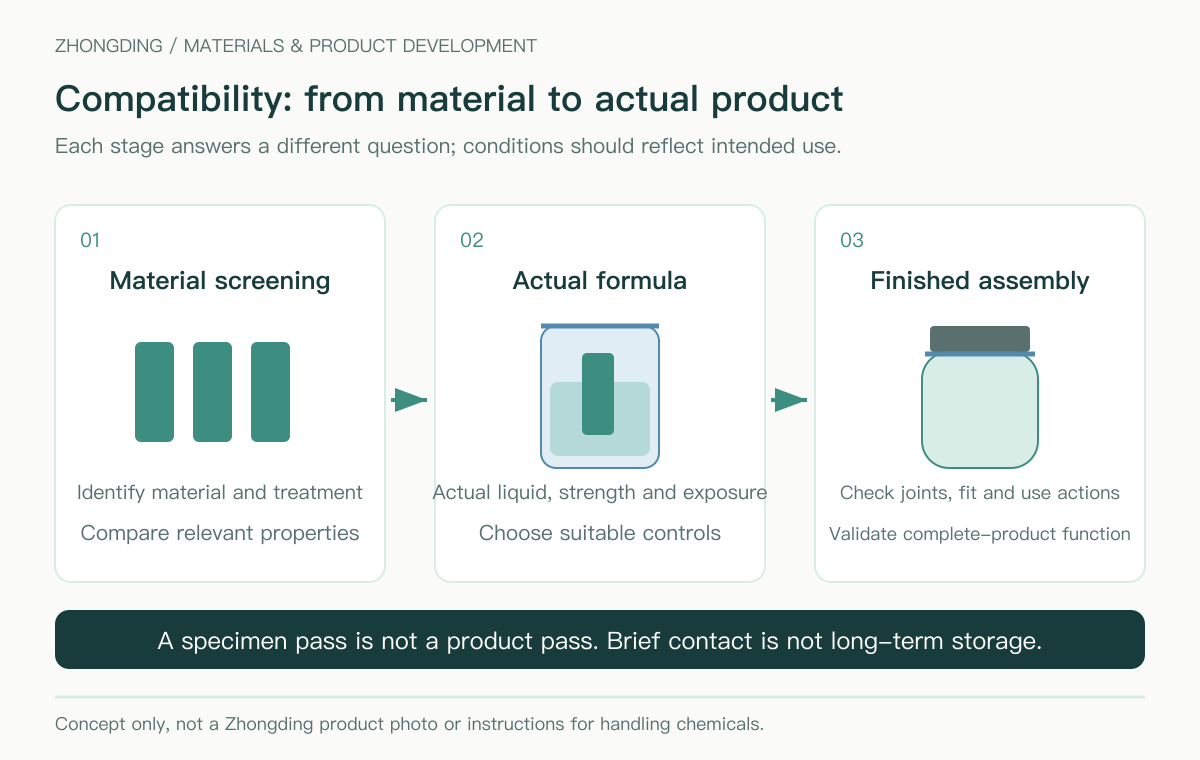
Figure 6. These levels complement each other. One specimen cannot establish the suitability of the complete product.
A dispensing-container example: why testing the body alone is not enough
This is a hypothetical scenario illustrating the method, not a test conclusion for an existing Zhongding product.
A brand plans a flexible container for a cleaning liquid. Material specimens remain within agreed requirements, but the assembled container leaks. Investigate the neck fit, cap, gasket or valve, assembly method and squeezing conditions. The specimen result alone does not validate the complete product.
The opposite situation can also occur: a short finished-product observation shows no leakage, while a material property approaches an agreed project limit. Further evaluation is needed; present functionality does not justify overlooking continuing change.
Keep material screening, assembly inspection and finished-product testing records separately, linked to the same sample revision. When the formula, color or component changes, the records show which evidence needs review.
Record water resistance, oil resistance and product suitability separately
Water resistance does not establish compatibility with cleaners or oil-based formulas. Resistance to one oil does not mean resistance to all organic liquids. Material compatibility does not automatically establish leak resistance or suitability for a particular contact application.
When reviewing a “passed” report, check the material or sample identity, medium, concentration, time, temperature, method and acceptance basis. Without these conditions, another person cannot meaningfully evaluate the conclusion.
What Zhongding can contribute to liquid-contact product development
The Zhongding team brings years of silicone product manufacturing experience to discussions of materials, geometry, tooling and sample behavior.
Zhongding develops and manufactures silicone dispensing containers, cleaning-related structures and associated components. Using the customer’s application, liquid information and reference sample, we can discuss the body or part geometry, interface fit, material requirements and sample-review criteria before progressing to a specific development and production proposal.
Storage leakage and deformation after cleaning, for example, call for different areas and sample conditions to be examined. Defining the issue in terms of actual geometry and exposure gives sample discussions a clear basis. Suitability for a particular formula still requires validation under agreed conditions; an existing product shape is not proof of compatibility.
What should a compatibility brief for Zhongding include?
Describe the product, actual liquid or controlled formulation information, contact temperature and duration, cleaning method, assembly state and critical function. Mark unresolved items for confirmation instead of using claims such as “resists all oils” or “suitable for every personal-care formula.”
Use the Zhongding silicone product development process to organize the requirements, then discuss materials and samples through the contact page. Defining liquid, material and geometry together makes compatibility testing useful for selection and reduces the risk of turning a limited test result into a promise about an entire product.