
A household study reveals more than bacterial counts
Luisana and colleagues at North Carolina State University published a PLOS ONE study in 2022 with 417 questionnaires and a hygiene intervention involving bowls from 68 dogs owned by 50 people. Aerobic counts fell in both instructed groups after approximately a week. Only 8% of follow-up respondents in those groups said they were likely to follow all instructions long-term. Luisana et al., 2022: household dog-bowl hygiene
This was not a silicone material ranking or proof that a particular product prevents illness. The design implication is that a useful method also needs to be manageable. Many steps or unusual tools create a maintenance burden.
Two early observations can help: whether a first-time user understands disassembly, and whether visible residue remains in difficult locations after following the instructions. Neither replaces microbiological testing, but both can expose geometry and instruction problems.
Why edges, roots and interfaces deserve attention
Food on an open surface is visible. Food inside deep grooves, at the roots of contact features or around nipple joints can be harder to reach. If a brush only contacts raised features, recessed surfaces do not receive equivalent scrubbing. A clean-looking exterior also says little about a narrow assembly gap.
Silicone flexibility can help open some regions, but not every structure can be turned inside out. Open or disassemble only as intended, avoiding excessive stretching of narrow necks or thin edges. Removing unnecessary blind recesses, making corners accessible and providing drainage space can be more useful than adding intricate decoration.
Zhongding’s three-nipple nursing feeder, with removable silicone nipples and an ABS body, makes the issue concrete: nipple openings, joints and storage areas each belong in the cleaning path. Flexible exterior parts do not remove the need to consider internal passages.
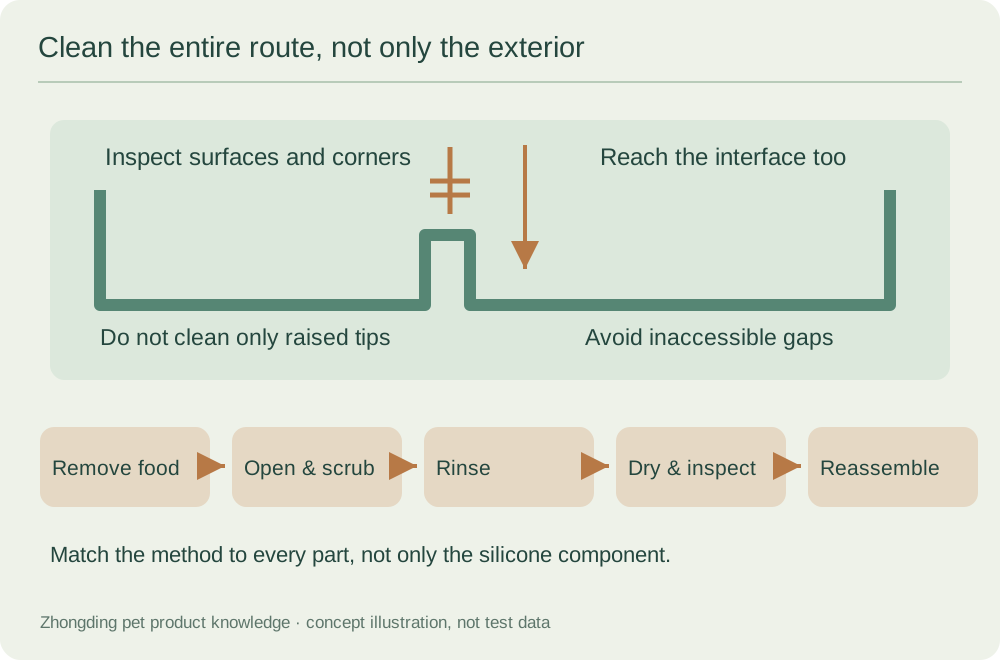
Cleaning design concept: visible, reachable, rinseable, dryable and correctly reassembled.
Cleaning and disinfection have different roles
The CDC’s pet-supply guidance, updated in February 2026, distinguishes cleaning to remove soil from disinfection to kill microorganisms, and calls for following item and cleaner instructions. Remove food and dirt before considering additional disinfection. Dishwasher use depends on the item being suitable for it. CDC: cleaning and disinfecting pet supplies
These are care instructions, not silicone certification. Follow the item’s method, scrub adequately, rinse and dry. When disinfection is needed, select a method suitable for the item and intended animals, follow its label, keep pets away from chemicals and do not improvise chemical mixtures.
An assembly may include silicone, a plastic body, connectors and printing. A heat treatment permitted for one silicone part does not authorize boiling the assembly or labelling every model suitable for high-temperature disinfection. Define allowed methods for the relevant parts and assembled state.
Turn differing guidance into usable instructions
FDA guidance calls for washing pet food bowls and utensils after each use with soap and hot water. The CDC’s example schedule distinguishes wet food after each use from dry food and water daily. For the milk, wet food and spreadable-food contact parts discussed here, an after-use routine avoids treating a feeding item like an occasionally washed toy. FDA: safe handling of pet food and treats
Consumer instructions should answer practical questions: when to clean, what to remove first, which tool reaches the surface, how to rinse and position parts, and how to check reassembly. Ill animals or household members requiring additional protection may need advice from veterinary or medical professionals.
Do not mask persistent odour, stickiness or cracks with fragrance. First investigate food and cleaner residue, then surface damage. Replace or consult the supplier about an item that cannot be restored to normal condition. Colour change alone does not diagnose bacteria or toxicity.
Make cleanability comparable during development
A bench cleaning exercise can use the actual intended food, a defined filling method and a fixed standing time. Have an operator follow the proposed instructions. Record disassembled parts, tool access, repeated scrubbing, rinsing and drying difficulties. Keep conditions consistent: cleaning one sample immediately while allowing food to dry on another makes the comparison difficult to interpret.
A changed groove or interface must still support filling, food access and assembly. Easier washing should not undermine normal use. After repeated cleaning and reassembly, inspect looseness and subtle cracks. If microbiological effectiveness needs verification, an appropriate laboratory should evaluate the defined process. Visual inspection must not be presented as a microbial result.
How Zhongding can reduce maintenance difficulty
The Zhongding team has years of silicone product manufacturing experience. Its pet feeding products and cleaning-related structures provide a basis for discussing removable interfaces, openings, corners, brush access and packaging instructions. Including washing in sample review brings everyday difficulties into view earlier.
Bring a complete cleaning sequence, photographs of residue locations or a sample. Through Zhongding OEM/ODM development, these observations can become specific changes. Good maintenance design lets people complete the right steps without guessing or struggling with disassembly.