
Define the decision before deciding how to sample
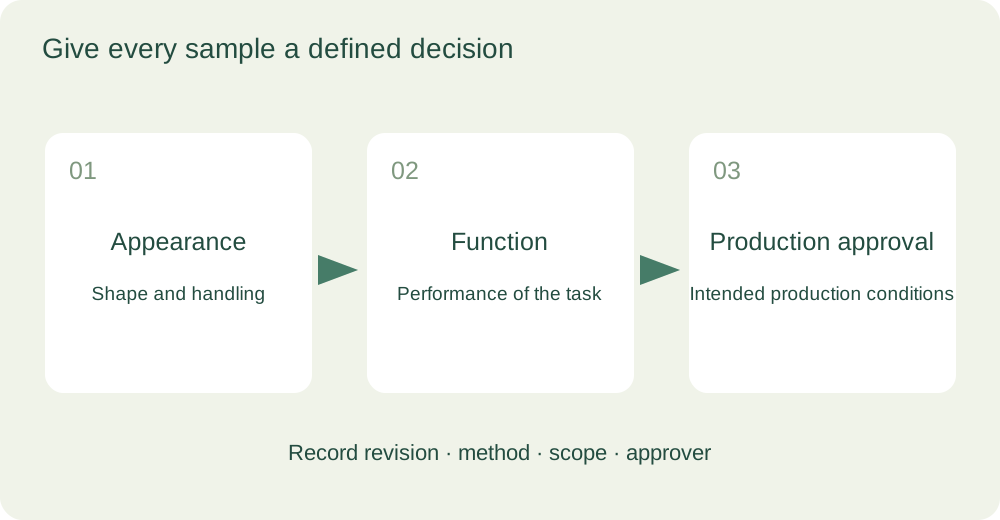
An early project may need to resolve shape, grip and component layout. At that point, a model helps the team make design decisions. Functional work then focuses on actual materials, mating parts, contact liquids and operating actions. Before production, attention shifts to whether the intended tooling, materials and process can repeatedly deliver the agreed product.
These are not three legally prescribed stages that every factory must follow, and each need not require a separate round. An established design may combine some work; a new structure may require iterations. The essential question is what each approval covers. Does color approval include printing? Has the bottle held the intended formulation? Have approved individual components been evaluated as an assembly?
| Sample purpose | Main question | What it does not automatically establish |
|---|---|---|
| Appearance and interaction | Are the form, size direction, grip and logo position appropriate? | A model made with a different material or process does not establish production functionality |
| Functional evaluation | Can the intended material and structure perform the task? | A few successful samples do not represent an entire lot |
| Production approval | Do intended production conditions meet agreed appearance, dimensional, functional and packaging requirements? | One approval does not remove the need to review later changes |
Why can “match the sample” still lead to disagreement?
A reference sample preserves overall appearance, color and feel, but cannot express every requirement by itself. Lighting can change how the same object looks. Measurements of flexible parts can depend on support and measuring technique. Without an agreed method, both parties can inspect carefully and still reach different conclusions.
Pair the physical reference with a concise approval record: sample ID and revision, materials and components, acceptable appearance, critical dimensions and measurement methods, functional conditions, packaging revision and the responsible approver. Where useful, agree limit samples for acceptable visual variation. A compressed or color-adjusted phone photograph should not carry the entire acceptance decision.
NIST describes conformity assessment around demonstrating fulfillment of specified requirements. For a purchasing team, the useful principle is to define those requirements first, then choose the relevant checks. Possessing a report does not, by itself, answer every product question. NIST: Conformity Assessment Basics
Why do three passing samples not establish a lot’s defect rate?
Consider a hypothetical probability calculation. If each item independently has a 10% chance of nonconformity, a random set of three still has a 0.9³, or 72.9%, chance of containing no nonconforming item. Finding no problem in three pieces therefore differs from establishing that a lot has none. This is a binomial example, not Zhongding production data or a recommended three-piece inspection plan. NIST: Binomial Distribution
Production observations may not meet the independent, identical-probability assumptions. Parts from one cavity, period or adjustment condition may share a deviation. Recording material lot, cavity, time and process context can therefore be more informative than simply adding a few samples of unknown origin.
Lot acceptance sampling uses an agreed plan to make an acceptance or rejection decision. NIST specifically distinguishes that purpose from estimating the lot’s quality. Sample size and decision rules require a separate decision based on the order, risks and applicable requirements; a development sample review is not a substitute for shipment inspection. NIST: What Is Acceptance Sampling?
Illustrative scenario: an approved bottle receives a different cap
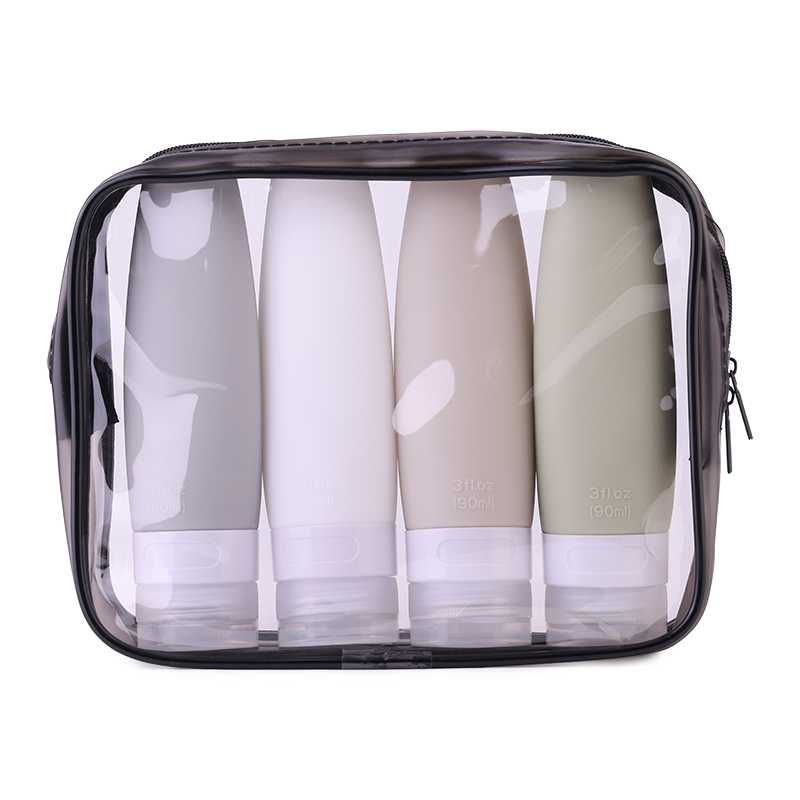
Consider a brand selecting an existing travel bottle and approving its color before requesting a different cap appearance. In this hypothetical project, purchasing views the change as cosmetic, while the approval record does not clearly establish whether the cap was within the approved scope.
The solution is an impact review, rather than automatically repeating everything. If the new cap changes neck-contact dimensions, the closure or the dispensing area, review assembly, opening and closing, delivery and relevant sealing behavior. If only a graphic in a non-contact area changes, focus on the decoration and its durability in use. Determine the actual scope through design review.
Assign a new revision, list the differences, identify which approvals remain valid and which checks need repeating, and obtain approval from the responsible person. Unaffected evidence can remain useful; affected conclusions cannot simply be inherited. This prevents a supposedly minor final change from quietly altering performance while avoiding unnecessary repeated work.
Turn feedback into an executable improvement
“Improve the feel” is difficult to act on. “With wet hands and the intended cleanser, users repeatedly reposition their fingers” identifies a concrete condition. Likewise, a color complaint becomes more useful when it names the reference, light source and area of mismatch, allowing the team to investigate overall color, local thickness or surface appearance.
Record each issue in a consistent order: the conditions, affected location, observed behavior, desired change and how improvement will be judged. A sampling round then produces an actionable decision record as well as physical parts.
Zhongding’s travel bottle range and existing brush structures offer starting points for color, branding and structural discussions. The team has years of silicone product manufacturing experience. For an OEM/ODM project, bring drawings, reference samples and acceptance needs so we can clarify the sample’s purpose before discussing materials, tooling, packaging and production approval. A valuable sample makes a specific decision more reliable.