
For brands and product developers, the useful comparison is which combination of material and processing can consistently meet the product requirements under agreed conditions.
What do LSR and “solid silicone” mean?
In molded-product discussions, liquid silicone usually means liquid silicone rubber, or LSR. It is commonly supplied as two components, which are metered, mixed and cured with heat. Dow describes LSR as a two-component silicone rubber that can be pumped, metered, mixed and heat-cured. Source: Dow LSR technical overview
“Solid silicone” is an informal purchasing term. Here it refers mainly to high-consistency rubber, or HCR, which is a high-consistency compound before molding. It does not mean the finished part is rigid, and it does not specify its final hardness.
Material family and curing system are separate concepts. HCR can use peroxide curing or platinum-catalyzed addition curing; common LSR uses platinum addition curing. Therefore, platinum-cured silicone is not synonymous with LSR, and HCR is not limited to compression molding. HCR can also be injection molded. Source: Elkem silicone rubber materials and processing overview
A project brief should identify the material family, specific grade, curing system and proposed molding process separately. Items that have not been decided can remain open for evaluation.
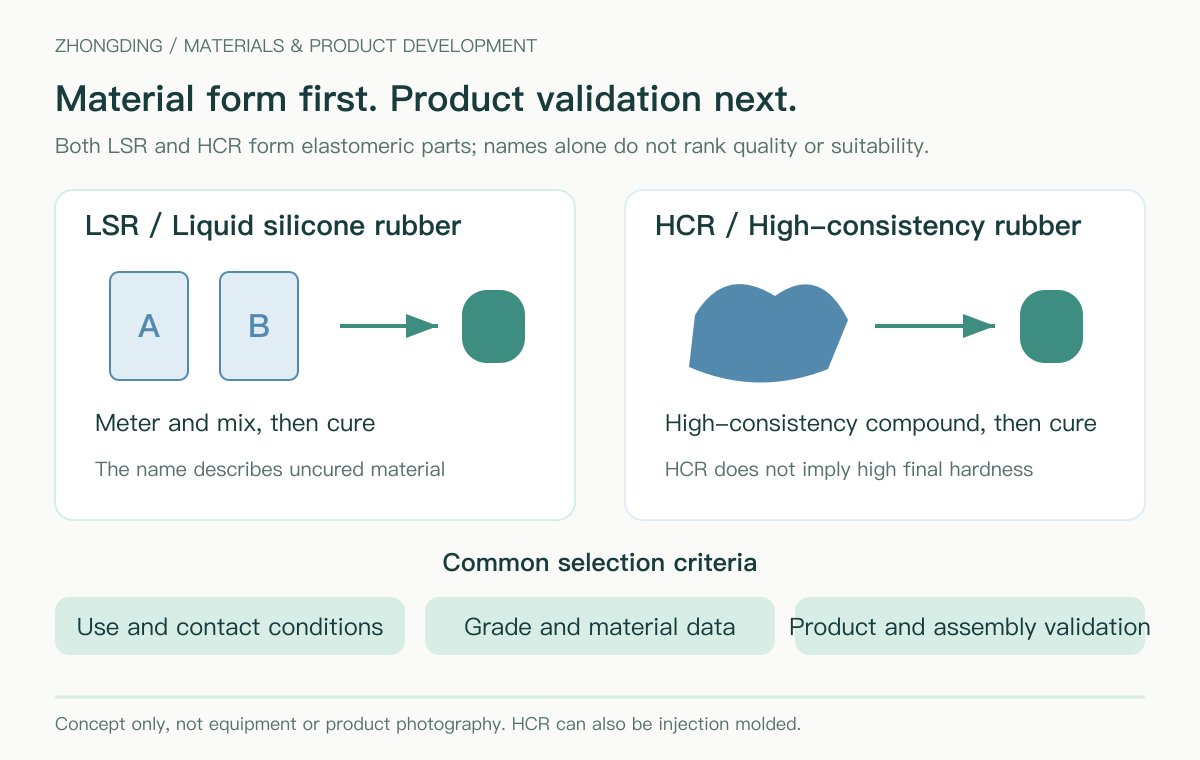
Figure 1. Identify the material family, then compare specific options against the same product requirements.
Why define the product's task before comparing materials?
Consider two ordinary silicone parts: a storage sleeve that is repeatedly folded and a gasket that remains compressed after assembly. Both may need to feel soft, but softness does not describe their most important failure risks.
For the sleeve, thin-edge tearing, appearance after folding and consistent feel may be priorities. For the gasket, assembly gap, recovery after compression and sealing during use matter. Comparing equal Shore A hardness values would leave these differences unexplored.
It helps to describe requirements at three levels:
| Level | Question to answer | Information for the supplier |
|---|---|---|
| Use conditions | How is it used, for how long, and in contact with what? | Temperature changes, cleaning, liquids and loading |
| Product function | What counts as an acceptable result? | Assembly feel, sealing, appearance and repeated operation |
| Validation | How will the result be confirmed? | Sample condition, test method, observation period and acceptance rules |
“Make a high-quality silicone accessory” is not a useful selection requirement. “The part sits in a fixed gap and must retain its assembly and sealing function after contact with a specified cleaning liquid” gives both parties a testable starting point.
How should silicone material data sheets be compared?
First confirm the grade, then check whether specimen and curing conditions are comparable. Tensile strength, elongation at break and tear strength describe different loading behavior; none replaces a complete durability assessment. Shin-Etsu lists these properties separately and gives relevant test conditions. Source: Shin-Etsu silicone rubber properties handbook, pages 10–11
Before selecting a material, identify gaps in the comparison:
- Do both candidates report the same critical property?
- Were the data obtained with comparable specimens, temperatures and cure states?
- Are the values typical reference data or agreed delivery requirements?
- Can a standard specimen represent the part's most vulnerable feature?
A material may perform well as a standard test specimen while the finished part contains a very thin connecting edge. That edge's geometry, parting-line position and actual processing condition still need sample validation. Data sheets help screen materials; finished-product testing evaluates whether the design works.
Hardness is one input. See the silicone hardness selection guide for scales and measurement conditions. Other critical properties still need review after hardness has been chosen.
A manufacturer's data example: hardness is not the whole specification
Shin-Etsu Chemical's official page for KE-5161-U (X-30-1477-U) lists Shore A hardness of 62, tensile strength of 8.6 MPa, elongation at break of 410% and crescent-specimen tear strength of 18 kN/m. These describe indentation, tensile and tearing behavior separately.
The page specifies C-8B curing agent at 1.0 phr, a primary cure of 165 °C for 10 minutes and post-cure of 200 °C for 4 hours, and identifies the figures as non-specification values. This illustrates reading data together with their conditions; it neither identifies a material used by Zhongding nor reports Zhongding finished-product measurements. No publication year is stated; checked September 20, 2026. Source: Shin-Etsu KE-5161-U official product data
How can LSR and HCR be compared without confusing geometry with material behavior?
During initial screening, keep geometry, color targets, use conditions and acceptance methods as consistent as possible. If one sample is thin and another much thicker, their different feel cannot simply be attributed to LSR versus HCR.
There are limits to keeping geometry identical. Different molding routes may require changes to gates, parting lines or local features. Use two stages: first compare material candidates under comparable conditions, then compare complete product designs adapted to each process. The second stage evaluates material, geometry and processing together; it is not a test of the material alone.
For repeat orders, retain the grade, drawing revision, color requirements, post-treatment state and acceptance record for each sample. A later sample that feels similar does not, by itself, show that the original manufacturing specification was repeated.
Three approaches that can lead to repeated material selection
The first is choosing a material name and then looking for reasons to justify it. This can hide the real use requirements. Define essential conditions first, then invite candidates supported by relevant evidence.
The second is treating clarity, odor or feel as proof of grade. These may be appearance or sensory acceptance criteria, but alone they cannot establish composition, complete performance or suitability. Observations need to be considered alongside material documents and specific tests.
The third is comparing only raw-material price per kilogram. Tooling, molding, trimming, necessary post-treatment, inspection and losses also affect a finished product. A purchasing comparison needs the cost of acceptable finished parts under the same requirements, rather than a material price detached from the design.
How Zhongding can help turn material requirements into samples
The Zhongding team brings years of silicone product manufacturing experience to discussions of materials, geometry, tooling and sample behavior.
If you have only a reference sample or are unsure whether LSR or HCR suits the product, tell Zhongding how it will be used, what it will contact and which aspects of its feel should be retained. We support silicone product development, structural and tooling discussions, sample making and production coordination, helping define the questions that a material and processing proposal needs to resolve.
For example, a soft storage sleeve may need repeated folding, while a soft gasket needs a defined fit and compressed state. We can bring those different requirements into the structural brief and sample-review criteria, then develop the agreed proposal. Specific materials, tests and deliverables are confirmed through project review.
Prepare a material brief before starting customization
A useful brief describes the purpose, drawing or reference sample, contacting media, use and cleaning conditions, critical functions, expected quantity and unresolved questions. If LSR or HCR grades have already been proposed, include their data sheets and the reasons for selecting them.
You can share this information with Zhongding, review the silicone product development and manufacturing process, or use the contact page to explain the material question that needs attention first. Final selection should be tied to the specific product and validation conditions, with material, sample and delivery requirements confirmed by both parties.