
This article explains the basic principles, differences and conditions for using the two processes. LSR and HCR are material categories, not interchangeable names for these two molding methods.
What is the basic difference?
In silicone compression molding, prepared compound is typically placed in an open cavity before the mold closes and applies heat and pressure. In injection molding, a feeding system introduces material into an already closed cavity, where curing takes place. Liquid silicone rubber injection molding commonly uses a metering and mixing system for LSR; HCR can also be injection molded. Source: Elkem silicone rubber materials and processing overview
To understand a molding proposal, identify both the material and the process, such as “a specified HCR grade with compression molding.” Describing a route only as “solid” or “liquid” does not explain the complete process.
The process name describes the basic route. Mold layout, cavity count, feeding, demolding and post-treatment still need to suit the part.
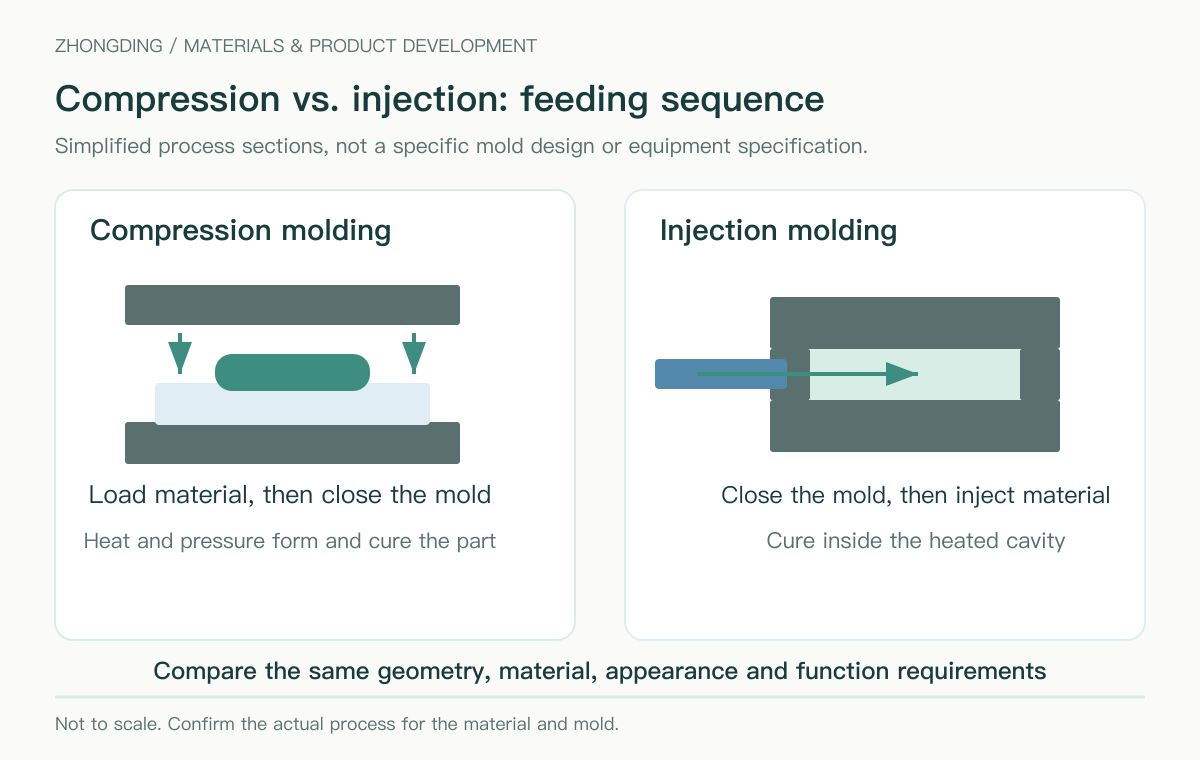
Figure 2. Simplified process principles. Finished-part quality also depends on material, mold design and process control.
Identify the difficult features before comparing machines
A complex outline is not necessarily the main manufacturing challenge. A functional edge, a thin connection, a parting-line mark that must not protrude, or a mating dimension may be more important.
Mark three types of areas on the drawing:
| Area | What to describe | What to evaluate |
|---|---|---|
| Functional | Contact, sealing, engagement or pressing areas | Whether defects or dimensional changes affect function |
| Visible | Surfaces users see, touch or photograph | Parting lines, gate marks, trimming and color consistency |
| Vulnerable | Thin edges, slender features and connections | Risk of damage during demolding and post-treatment |
This lets both parties discuss the same features. “No burrs” can confuse normal parting-line traces, silicone flash that needs control and defects that affect assembly. Identify the location, inspection method and acceptable condition instead of relying on an ambiguous description.
Automation does not replace mold and process validation
Silicone short shots, bubbles and flash cannot each be traced to one parameter merely by appearance. Equipment manufacturer YIZUMI discusses material feeding, mixing, mold venting, closure and temperature as possible contributors to molding defects. Source: YIZUMI LSR injection molding troubleshooting
For project evaluation, ask for evidence that locates the problem rather than simply requesting higher pressure or longer processing time. Does the defect recur at one location or in one cavity? Is it the same during continuous production and after a restart? Does a correction create a different problem?
One carefully selected sample cannot establish production consistency. A comparison can include a group of consecutively produced samples with cavity or batch information retained. Sample quantity and validation intensity should reflect project risk; there is no single number suitable for every silicone product.
Why can the same product have more than one reasonable process route?
If the design is still changing, first check whether critical features can be formed, remain intact after demolding and perform their intended function. Each geometry revision may require a new review of feeding, venting and release conditions.
Once geometry is stable, examine whether dimensions, appearance and function remain consistent during continuous production, and whether trimming or post-treatment changes the finished condition. Making one successful sample and consistently producing acceptable parts are different validation questions.
For demanding appearance requirements, use the same acceptance criteria for visible surfaces, silicone parting lines and trimming across both proposals. For assembly, agree on the condition and method used for silicone dimensional measurement. Dimensions measured while a soft part is loaded should not be casually compared with free-state dimensions. The public abstract of ISO 23529:2016, published by the International Organization for Standardization, covers rubber specimen preparation, measurement, storage and conditioning. For sample evaluation, separately agree on the applicable measuring force, fixtures and measurement state; these project recommendations are not presented here as verified detailed clauses of the standard. Source: ISO 23529:2016 official abstract
How Zhongding can help assess a molding route
The Zhongding team brings years of silicone product manufacturing experience to discussions of materials, geometry, tooling and sample behavior.
If you have a drawing or reference sample but are unsure which molding route to use, share the purpose, critical dimensions, visible surfaces and assembly requirements with Zhongding. Our silicone development and manufacturing services connect structural discussions, tooling, samples and production so that the process decision can be evaluated for the actual part.
The discussion can address fine features that may be difficult to fill, parting-line positions, demolding and trimming requirements, followed by sample review of appearance and function. This helps distinguish whether a part can be made from whether it meets its use requirements. The material and process are confirmed through structural review and sample results.
Keep these criteria in mind when evaluating a process
Ask whether the material can be fed and cured as intended; whether critical features allow filling, venting and demolding; whether parting lines and gates affect appearance or function; and whether dimensions and assembly behavior remain consistent after molding.
Compression and injection molding are both routes for making silicone parts. Understanding their differences means understanding how material enters the cavity and how material, mold and process conditions work together to shape the finished product.
To discuss custom silicone products with Zhongding, provide the geometry, use scenario and critical functions. Use the contact page to discuss suitable materials and molding routes.